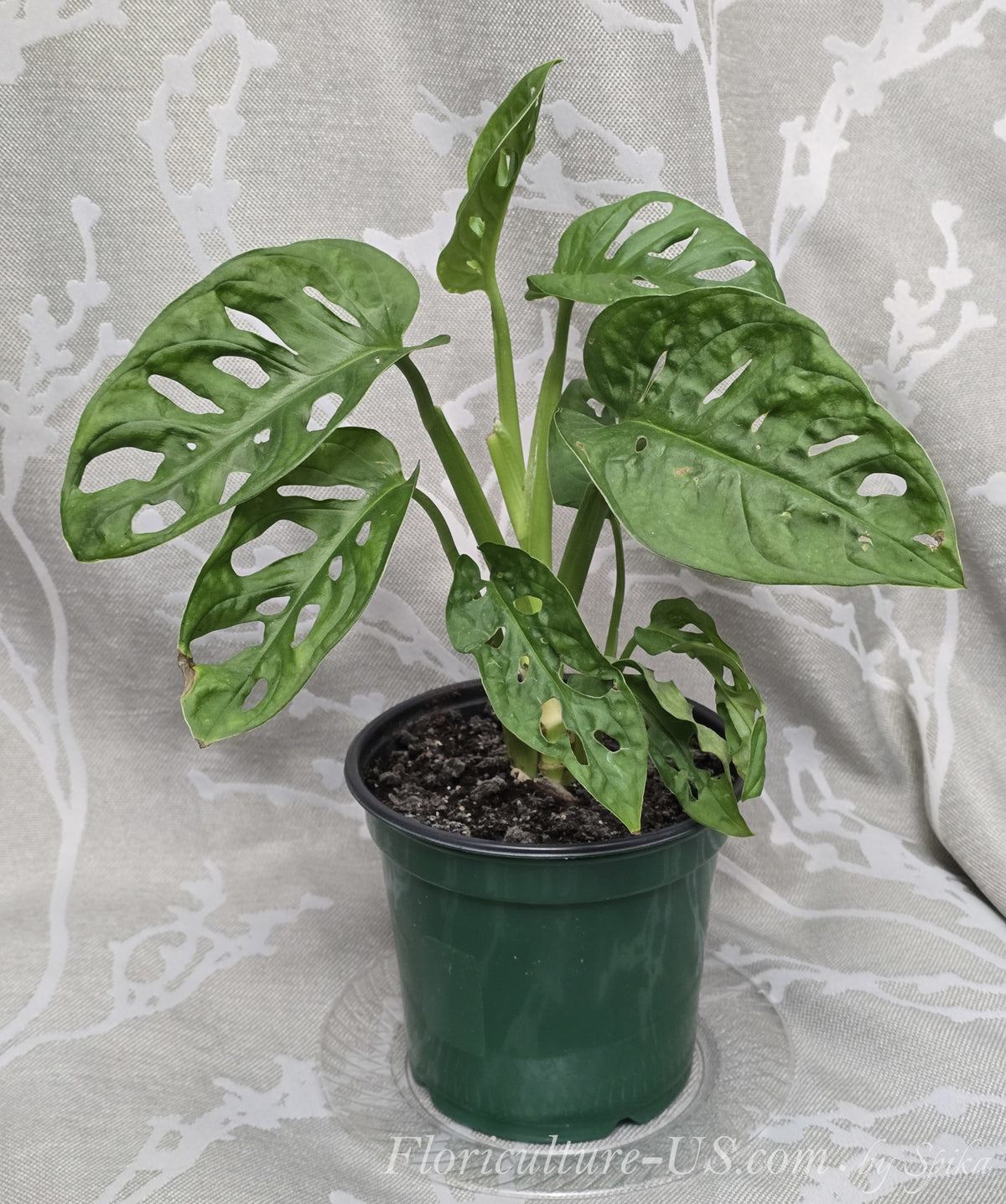
Monstera Adansonii
Monstera Adansonii
Regular price
$21.95
Regular price
Sale price
$21.95
Unit price
per
Shipping calculated at checkout.
1 in stock
Couldn't load pickup availability
Monstera Adansonii, Swiss Cheese Vine
Ships in pot. Pot size 5".
You will receive a plant very similar to the one pictured.
Monstera Adansonii, commonly known as the Swiss Cheese Vine, is a tropical indoor perennial climbing plant from the Araceae family. This species features vibrant green, heart-shaped or oval leaves with distinctive, naturally occurring holes (fenestrations) throughout the leaf blade. Its vining habit makes it perfect for climbing up a moss pole or cascading beautifully from a hanging basket.
Swiss Cheese Vine Care Guide:
Hardiness zone (USDA zone): 10-12.
Light: Bright, indirect sunlight. Avoid direct sun to prevent leaf scorch. Tolerates partial shade, but growth will slow down.
Watering: Moderate watering. Water when the top 1–2 inches of soil feel dry. Avoid waterlogging to prevent root rot.
Temperature: Warm-loving plant. Ideal range is between 65°F and 85°F. Keep away from cold drafts and sudden temperature drops.
Humidity: High humidity (50% or higher). Dry air can cause brown leaf tips. Appreciates regular misting or a humidifier.
Soil: Lightweight, chunky, and well-draining substrate. A mix of peat moss, perlite, and orchid bark works best.
Fertilizing: Feed with a balanced liquid fertilizer once a month during spring and summer. Stop fertilizing in autumn and winter.
It is advisable to purchase a heat pack during cold weather: Heat Pack